“Essay” comes from the French essayer meaning to try out.
When it comes to 19th-century US stamps, there are the stamps, stamps on cover (postal history), and all of the other ways in which stamps were used. But how did the stamps themselves come to be? If you’ve ever been curious about this then the field of essays should interest you. “Essay” comes from the French essayer meaning to try out.
In the nineteenth century, bank note companies competed for stamp contracts. They created original stamp designs and submitted them to the Post Office Department (POD) in hopes of being awarded the contract based on design, workmanship, and price. Of course, only one company would emerge as the winner in these competitions. Copies of the rejected designs form the basis of the collecting niche of essays, as they embody the very definition of “to try out.”
But do copies of these rejected designs still exist? The answer is yes! Many of the essays available to collectors came from banknote company files, of from the estates of the engravers who created the designs, and eventually they made their way into collectors’ hands.
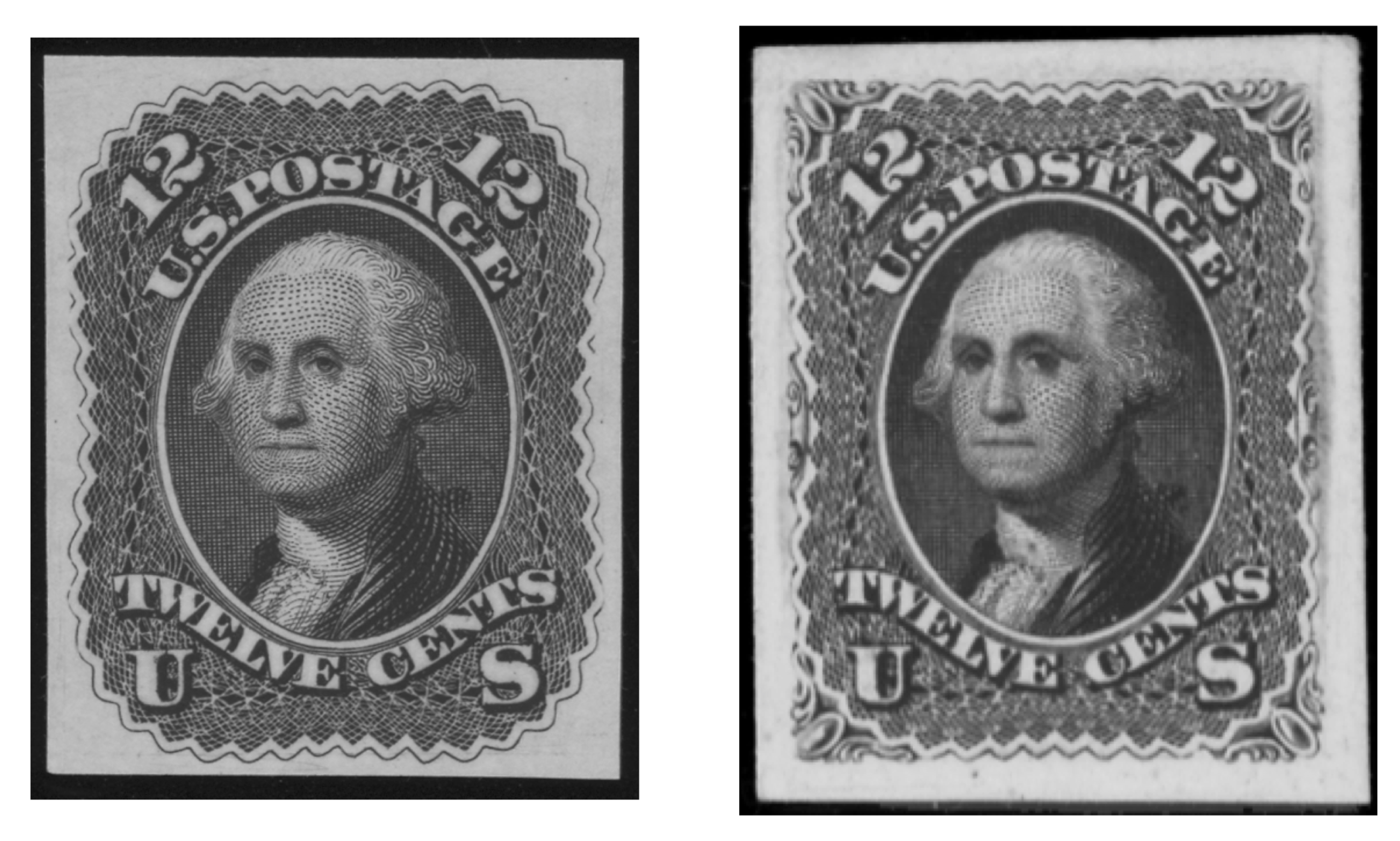
Left: the originally proposed design for the 12¢ stamp of 1861, an essay
Right: the design as adopted, shown here as a proof
But winning a stamp contract did not necessarily mean that the POD approved a company’s essayed designs. For example, after National Bank Note Company was awarded the contract for the 1869 stamps, the POD requested numerous design changes. This example compares National’s original concept for the 2¢ stamp, with a small denomination numeral, and the design of the stamp as issued where the numeral was enlarged at the POD’s request.
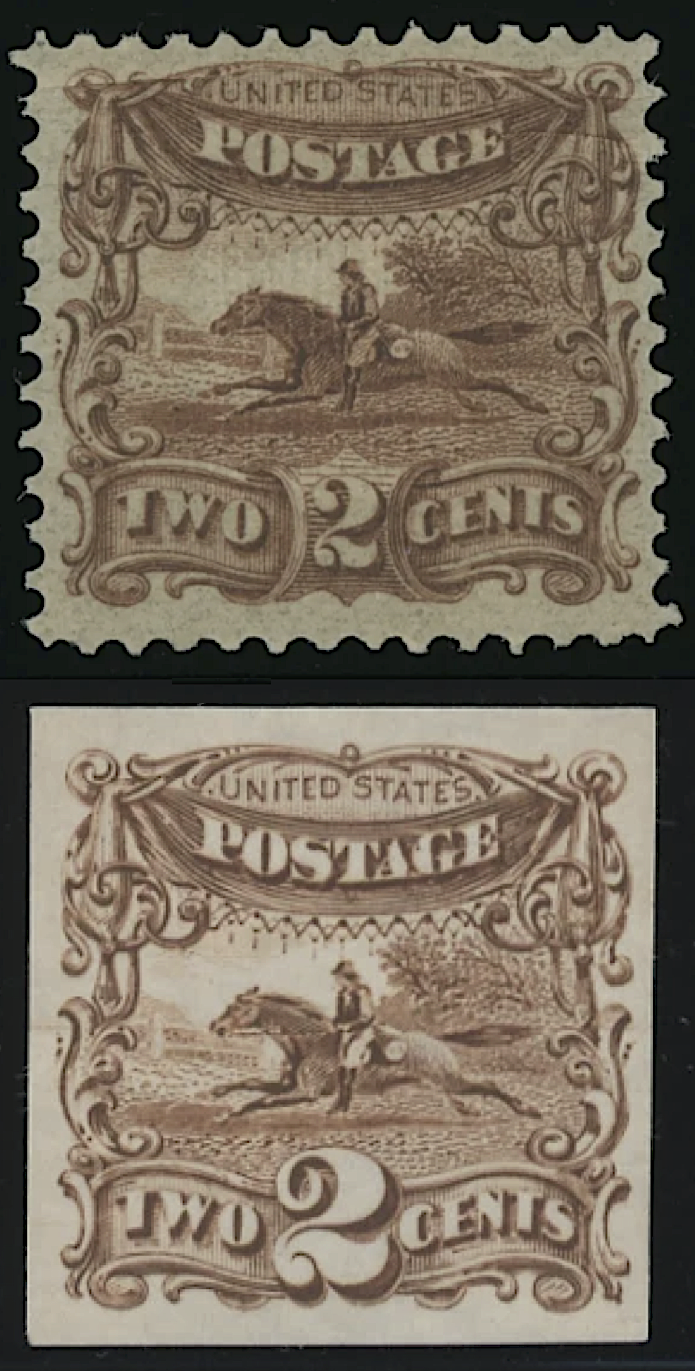
If you have a copy of this 2¢ stamp (Scott #113), having the companion essay adds significant dimension to the story of your stamp. And just the fact that copies of rejected designs still exist makes them exciting to own.
This comparison also points out a key aspect of what defines an essay: if the design printed from a die or plate differs even in a minor way from the stamp as issued, it’s an essay.
The world of essays includes original sketches and models (very rare or unique by definition), certain kinds of photographs (photo essays), prints from partially completed dies (engraver’s “progress proofs”), test printings made from dies and plates, and experimental stamps designed to prevent reuse. Click to view all of the postage essays in our inventory. We also stock revenue stamp essays.
